Category: Uncategorized

  • What actually happens at a baby class in Medway

    What actually happens at a baby class in Medway

    If you are sitting in Chatham or Gillingham with a six week old, googling baby classes and feeling slightly sick about the idea of walking into a room full of strangers, this one is for you.

    Are baby classes actually worth it?

    I would say yes, but probably not for the reason you are expecting.

    Your baby is not going to fall behind if you never attend a class. They will learn to roll and sit and crawl on their own schedule regardless of what any of us do. Anyone who tells you otherwise is selling something.

    What a good class actually gives you is a reason to be somewhere at a particular time each week, in a room where nobody thinks your baby crying is a problem, with a handful of other people whose week looks exactly like yours. The skills are real and useful. But the part that most parents tell me made the difference is having somewhere to go on a Tuesday.

    What about the free classes in Medway?

    You should absolutely use them. Medway’s children and family hubs run free and low cost sessions, and your health visiting team can point you at what is on locally. I would never suggest paying for something you can get free.

    They are a different thing, though, and it is worth knowing how before you choose. Free sessions tend to be drop in, so the faces change week to week and the group numbers can be large. That suits some families perfectly.

    What we do is a booked block with the same small group for six or eight weeks. You get to know the other parents properly rather than nodding at strangers, the routine builds week on week, and I have time to actually watch your hands and help. Plenty of families do both, and that is a very sensible plan.

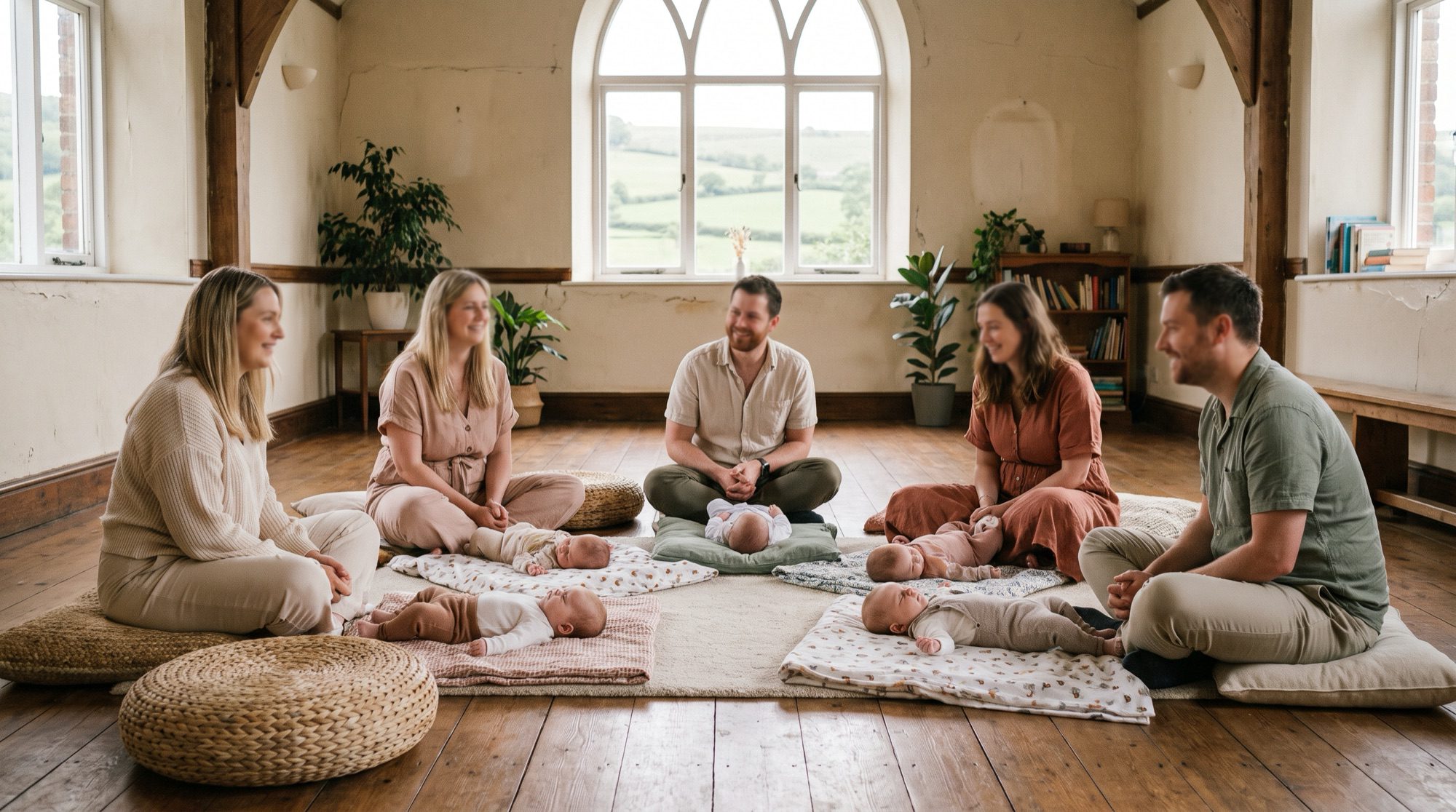
    What happens in an hour with us

    Every session follows the same shape, and that is deliberate. Babies settle far better into something familiar than into something new every week.

    1. Arriving. Come whenever you get there. There is no back of the class. Find a space, spread out your blanket, get comfortable.
    2. Settling in. We start with something calm and the same every week, so your baby learns what the beginning feels like.
    3. The main part. Depending on which course you are on, that is massage, or yoga and sensory play, or a mix. I demonstrate everything on a doll while you follow on your own baby, so nobody is being watched.
    4. Winding down. Something slow and quiet to finish, and a closing cuddle.
    5. Chatting. There is always time at the end. This is frequently the most useful bit of the whole hour.
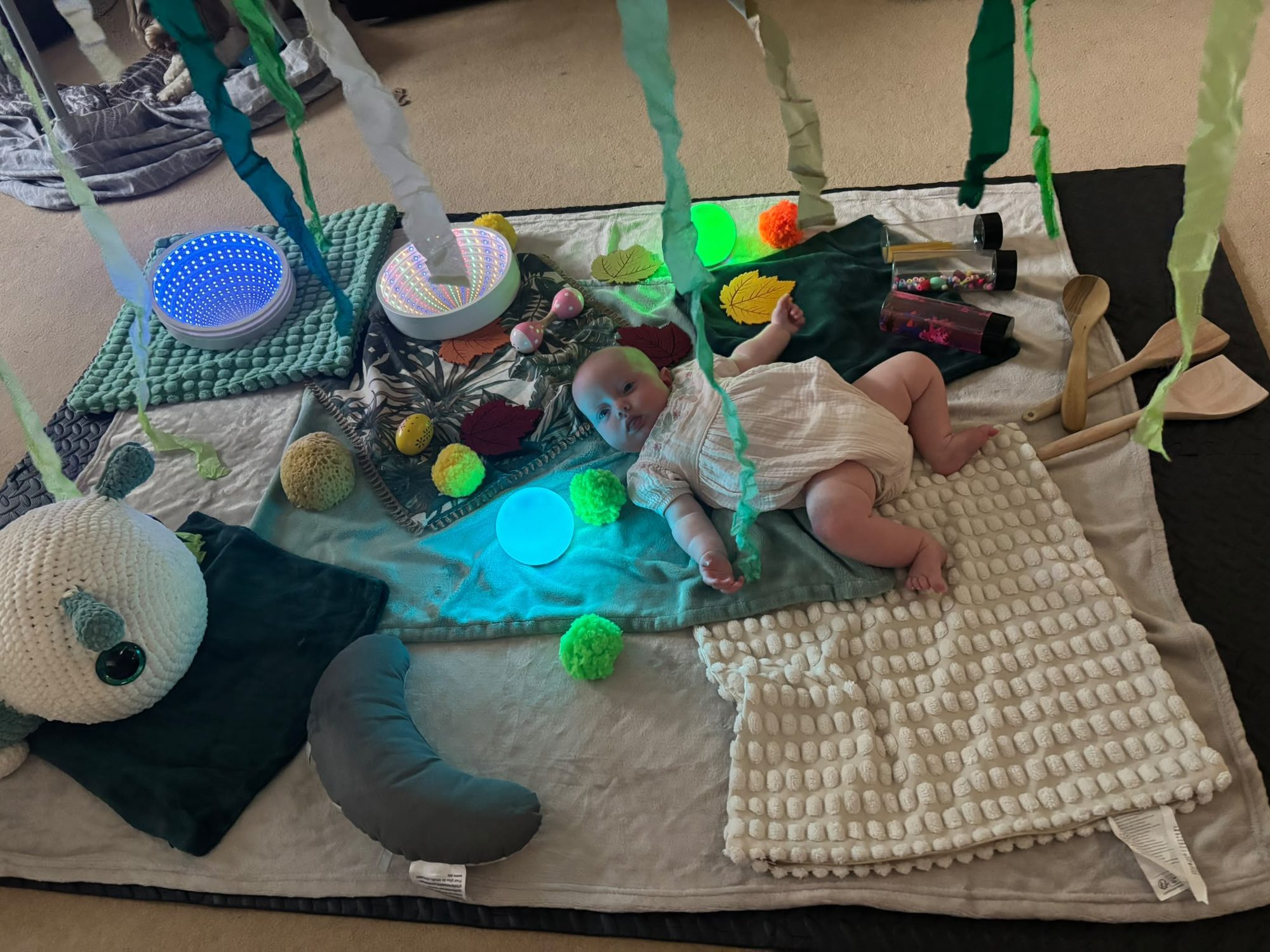
    A full baby sensory setup with lights, ribbons, textured blankets and wooden toys
    Everything is set up before you arrive. You just need to turn up with your baby.

    The things you are quietly worrying about

    “What if my baby cries the whole time?” Then your baby cries the whole time, and you will not be the only one. I have never once thought less of a parent for a crying baby. Neither has anybody else in that room, because it was their baby last week.

    “What if I need to feed?” Feed. However you feed, wherever you are sitting, whenever your baby wants it. No need to ask, no need to move.

    “What if we are late?” You will be late. Everyone is late. Getting a small baby out of the house is genuinely difficult and we all know it.

    “What if my baby sleeps through it?” You will still see everything and can practise at home that evening. Sleeping babies are very welcome, and honestly a bit of a treat for you.

    “What if I do not know anyone?” Nobody knows anyone in week one. By week three you will have a group chat. That is just how it goes.

    What to bring

    • A soft towel or blanket for your baby to lie on
    • A spare nappy, and a spare everything really
    • A drink for you, because you will forget otherwise
    • Clothes you can sit on the floor in without thinking about it

    Massage oil and all the sensory equipment are provided. You do not need to buy anything.
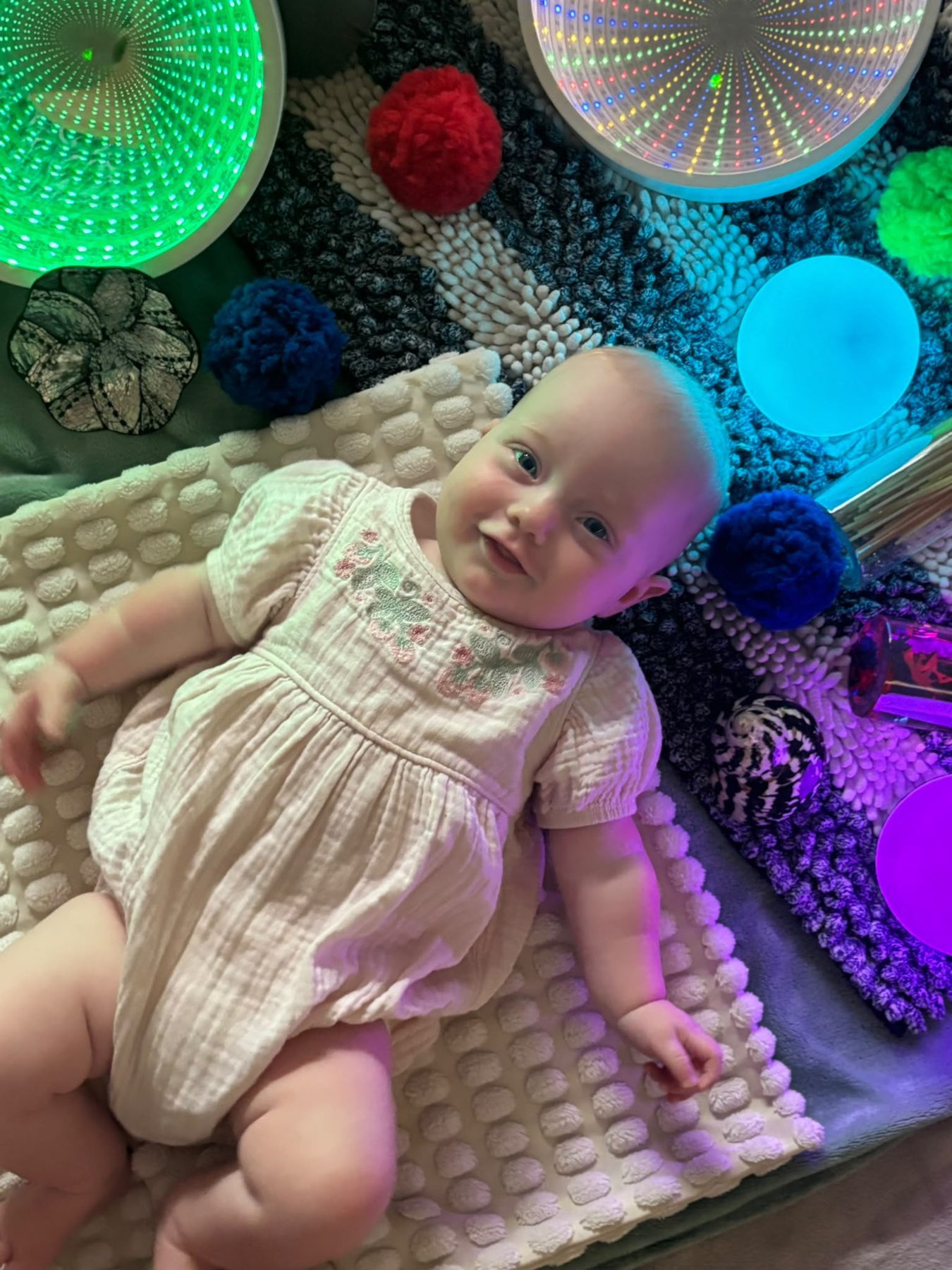
    A smiling baby lying among glowing sensory lights and textured blankets
    Week three, when they start to recognise what is coming.

    Which class, and when

    Go by stage rather than by date of birth:

    We run across Medway and families come to us from Chatham, Gillingham, Rochester, Rainham and Strood. If you are not sure which one fits, send me a message with your baby’s age and I will tell you honestly, even if the answer is that you would be better off waiting a few weeks.

    Otherwise, have a look at the upcoming dates and come and join us.
  • Baby massage for colic and trapped wind: the tummy routine I teach in week two

    Baby massage for colic and trapped wind: the tummy routine I teach in week two

    Week two of every baby massage course is the tummy week, and it is the one parents arrive early for. If your evenings currently involve a lot of pacing up and down the hallway, this is the week that tends to change things.

    Can you really rub a baby’s tummy to help with wind?

    Yes, and it is one of the oldest tricks there is. A baby’s digestive system is brand new and still learning its job. Air gets swallowed during feeds, it gets stuck, and because your baby spends most of their life lying down, it does not shift on its own the way it would for you or me.

    Gentle, warm, rhythmic pressure over the tummy, always in the direction the gut actually runs, helps that trapped air move along. It is not magic and it is not a cure. But it gives you something calm and purposeful to do at half past six in the evening, which matters more than people realise.

    Before you start

    • Wait about half an hour after a feed. Tummy work on a full stomach comes straight back up.
    • Warm the room and warm your hands. Cold hands will end the session before it starts.
    • Use a plain, unscented vegetable oil and patch test it on a small area first. We avoid nut based oils completely because of allergy risk.
    • Ask your baby first. This sounds daft. It is not. Cup your hands over their tummy, catch their eye, and see what they do. Over a few weeks they learn what is coming, and you learn to read the answer.
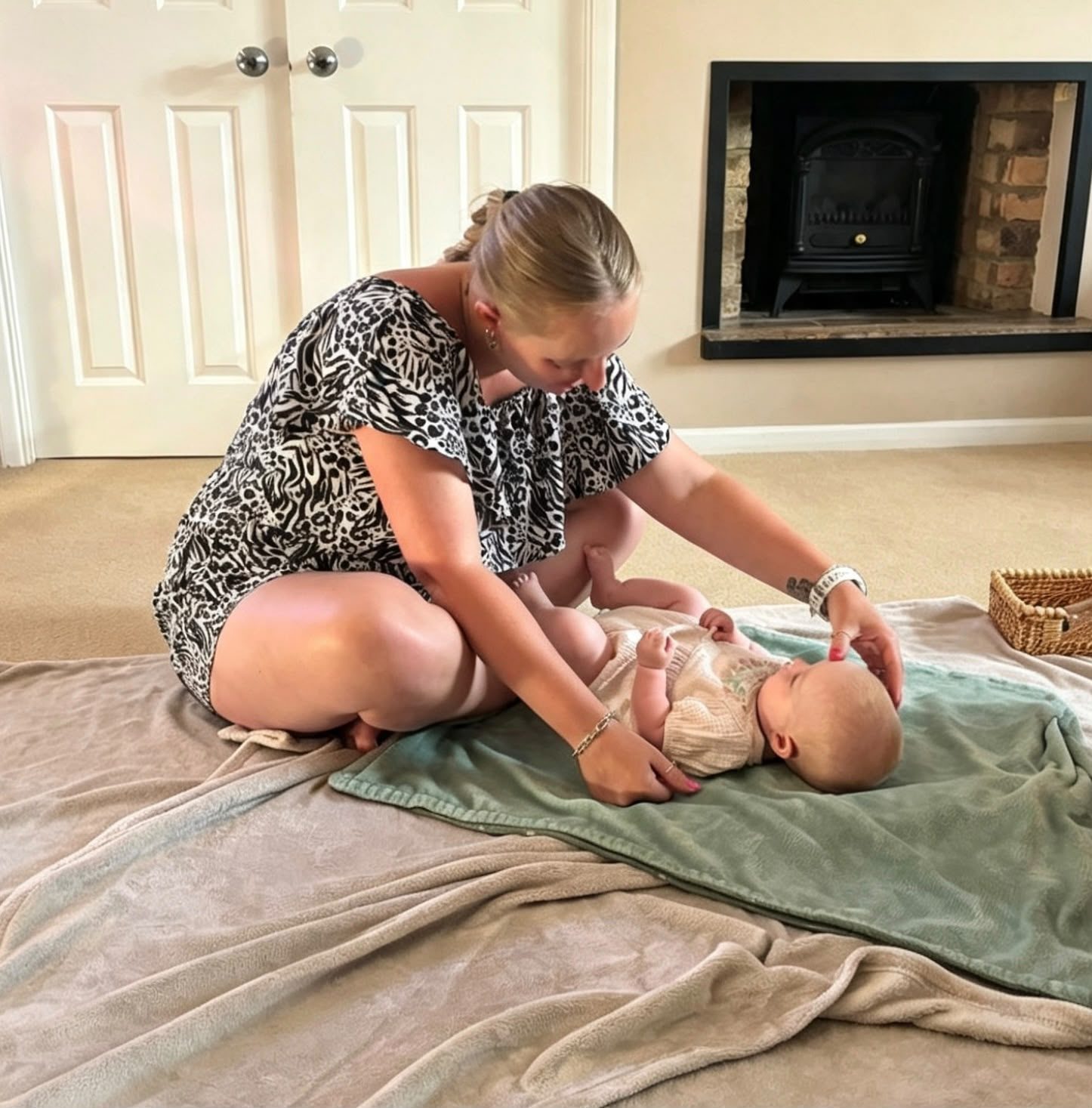
    Jess giving a baby a gentle massage on a soft blanket at a Cosy Cocoon class in Medway
    Slow, warm hands and a flat palm. Nothing here needs any strength at all.

    The strokes I teach in week two

    All of these go clockwise, from your baby’s left to their right as you look down at them. That is the direction the large intestine runs, and going the other way is working against it.

    Warming hands

    Rest one whole warm hand flat on the tummy, below the ribs and above the nappy. Do not move it. Just let it sit there for a few breaths so your baby knows where you are. This alone settles a lot of babies.

    Paddling

    Using the flat of one hand and then the other, stroke gently down the tummy, one hand following the other, like slow paddles. Soft pressure, unhurried, six or eight times.

    Clockwise circles

    With the pads of your fingers, make slow circles around the belly button, clockwise. Think of the pace of a clock’s minute hand rather than its second hand. This is the one most parents go home and use that same night.

    Knees to tummy

    Hold both ankles, bring the knees up gently towards the tummy, hold for a count of three or four, then let the legs stretch out again. Repeat a few times. Be led entirely by your baby here. If the legs resist, let them.

    Finishing

    Come back to that still, warm hand resting on the tummy. Beginning and ending the same way every time is what turns a set of strokes into a routine your baby recognises.

    How quickly does it work?

    Sometimes immediately, and it is very satisfying when it does. More often it is cumulative. Doing it at roughly the same time each day, particularly before the difficult stretch of the evening, tends to help more than doing it once in desperation at ten at night.

    What I would really like you to take from it, though, is the calm. On the evenings when nothing works, having something steady and familiar to do with your hands changes how the whole thing feels. Your baby picks that up from you.

    When to stop and ring somebody

    Stop the massage and speak to your health visitor, GP or 111 if your baby has a temperature, is being sick a lot or forcefully, has blood in their nappy, is not feeding, is difficult to wake, or if the crying sounds different from their usual and you are worried. Colic is very common, but a parent’s instinct that something is not right is worth more than any routine I can teach you. Please act on it.

    I am a childcare professional and a baby massage instructor, not a medical practitioner. Nothing here replaces advice from your health visitor, GP or the NHS.

    Come and learn it properly

    Reading strokes on a screen is one thing. Doing them with somebody watching your hands and saying “a bit slower, and lower down” is quite another, and it is the difference between trying it twice and actually using it.

    Tummy week is week two of the Cuddle Cocoon baby massage course in Medway. You can book a place or have a look at the upcoming dates.

  • When can you start baby massage? And why we say six weeks

    When can you start baby massage? And why we say six weeks

    This is far and away the question I am asked most, usually by a mum holding a very new baby who is not quite sure whether she is allowed to be out of the house yet. So let me answer it properly.

    The short answer: around six weeks

    Most baby massage courses, mine included, take babies from about six weeks old. That is not a rule handed down from on high, and nothing dreadful happens at five weeks and six days. It is simply the point where most families are ready.

    By six weeks you have usually had your postnatal check, your baby has had their first jabs, and feeding has settled into something that resembles a pattern, even if that pattern is chaos. You are also, and I say this gently, far more likely to be able to face leaving the house.

    You can absolutely massage your own baby before six weeks at home. Newborns love skin to skin and slow, warm hands. What we do in a class is a little more structured than that, and six weeks is when babies tend to get the most from it rather than sleeping through the lot. Although plenty of them still sleep through the lot, and that is fine too.

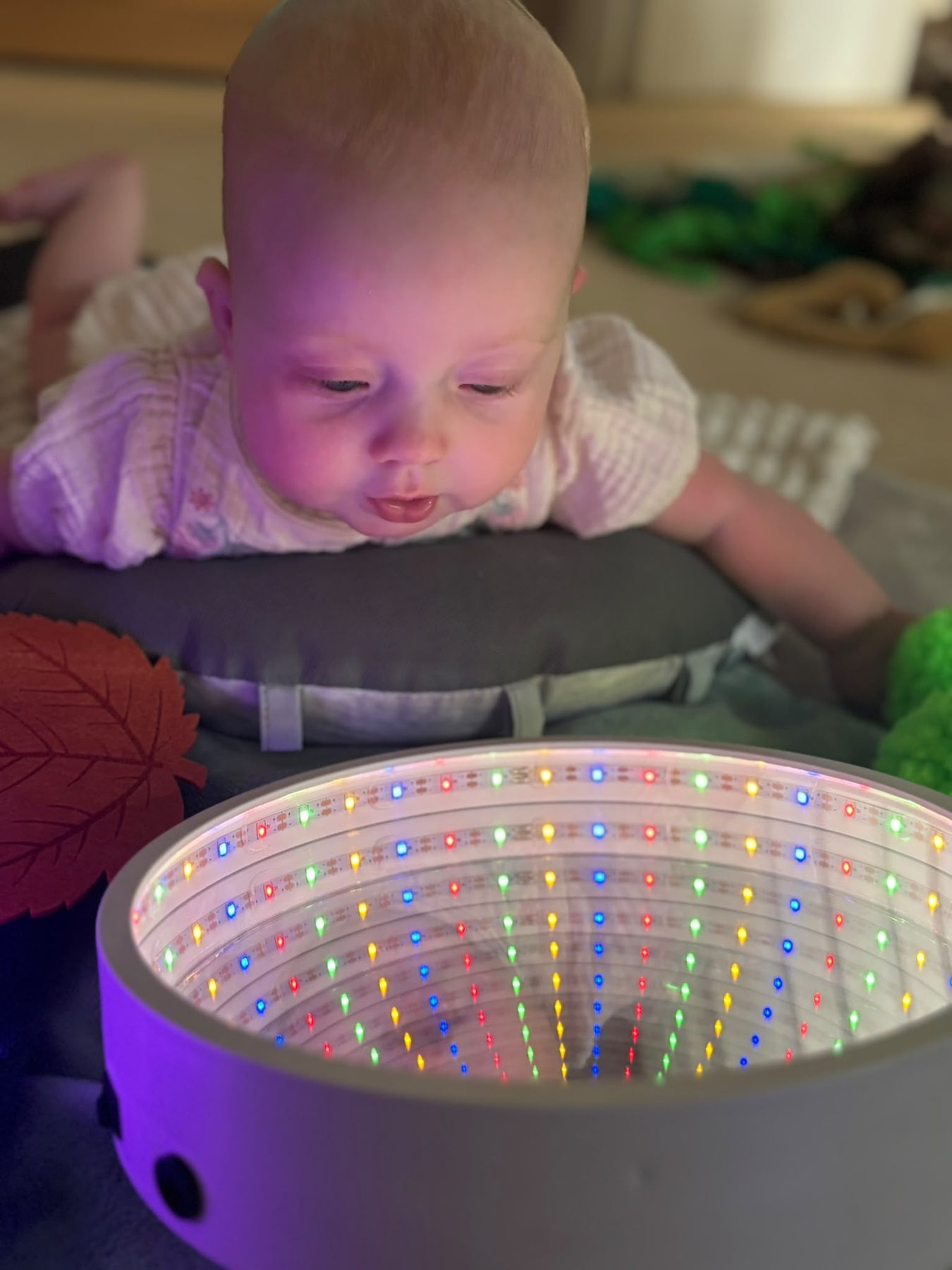
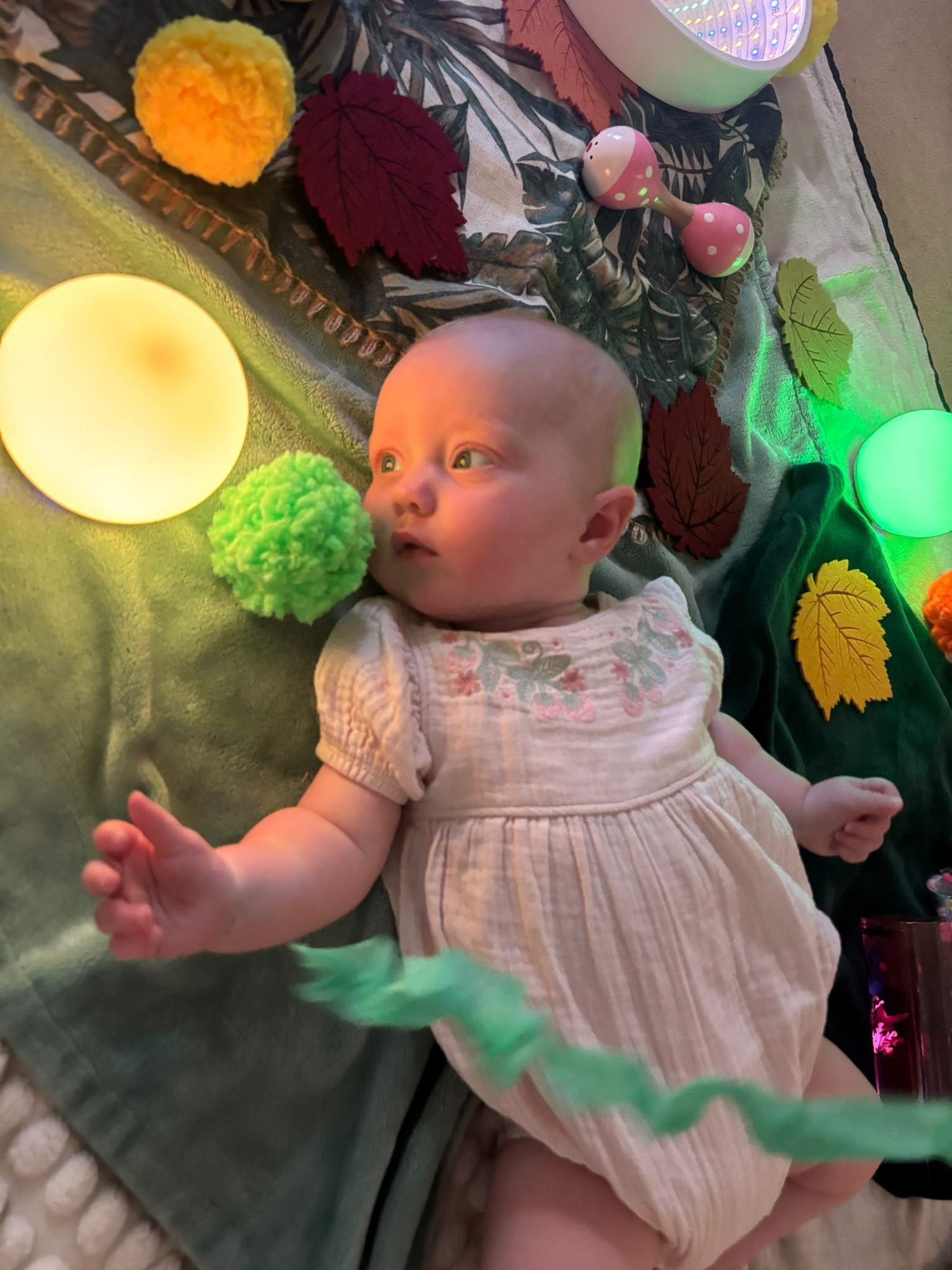
    A baby doing tummy time propped on a cushion, watching a colourful sensory light
    Six weeks on, and far more interested in the world than they were a fortnight ago.

    So what is the best age for baby massage?

    If you want a sweet spot, I would say between two and four months. Your baby is awake for longer stretches, they are starting to properly look at you, and they have not yet worked out how to roll away mid routine. That said, I have taught eight week olds who adored it and seven month olds who adored it just as much.

    The more useful question is not how old your baby is but what stage they are at. That is how I split our courses:

    • From six weeks, up to sitting. The Cuddle Cocoon baby massage course is six weeks of learning the full routine, one section at a time.
    • From eight weeks, up to sitting. The Little Wanderers adds baby yoga and sensory play alongside the massage. It starts at eight weeks rather than six because that is the earliest we begin yoga.
    • Once they are on the move. The Cosy Adventure is for crawling and cruising babies up to around thirteen months.

    Is it too late if my baby is six months old?

    No. I promise you it is not too late. Parents worry about this a lot and I wish they would not.

    An older baby massages differently, that is all. They wriggle more, they grab the bottle of oil, they want to roll onto their front halfway through the leg strokes. You adapt. The bedtime wind down you build at six months will still be working at eighteen months, and the confidence you get from knowing what your baby’s cues actually mean does not have an expiry date.

    When is it worth waiting?

    There are a few times I would say hold off for a little while, and none of them are about age:

    • Straight after immunisations. Leave the injection site alone for a couple of days. The rest of your baby is fine to massage.
    • If your baby is unwell or running a temperature. Cuddles yes, massage another day.
    • Straight after a feed. Give it a good half hour, particularly before any tummy work, unless you fancy wearing it.
    • If your baby was premature or has a medical condition. Have a quick word with your health visitor or paediatrician first. They will almost always say yes, and then you can relax.

    Baby massage is a lovely thing to do together, not a medical treatment. If you are worried about your baby’s feeding, weight, reflux or anything else at all, please talk to your health visitor or GP as well. They would far rather you asked.

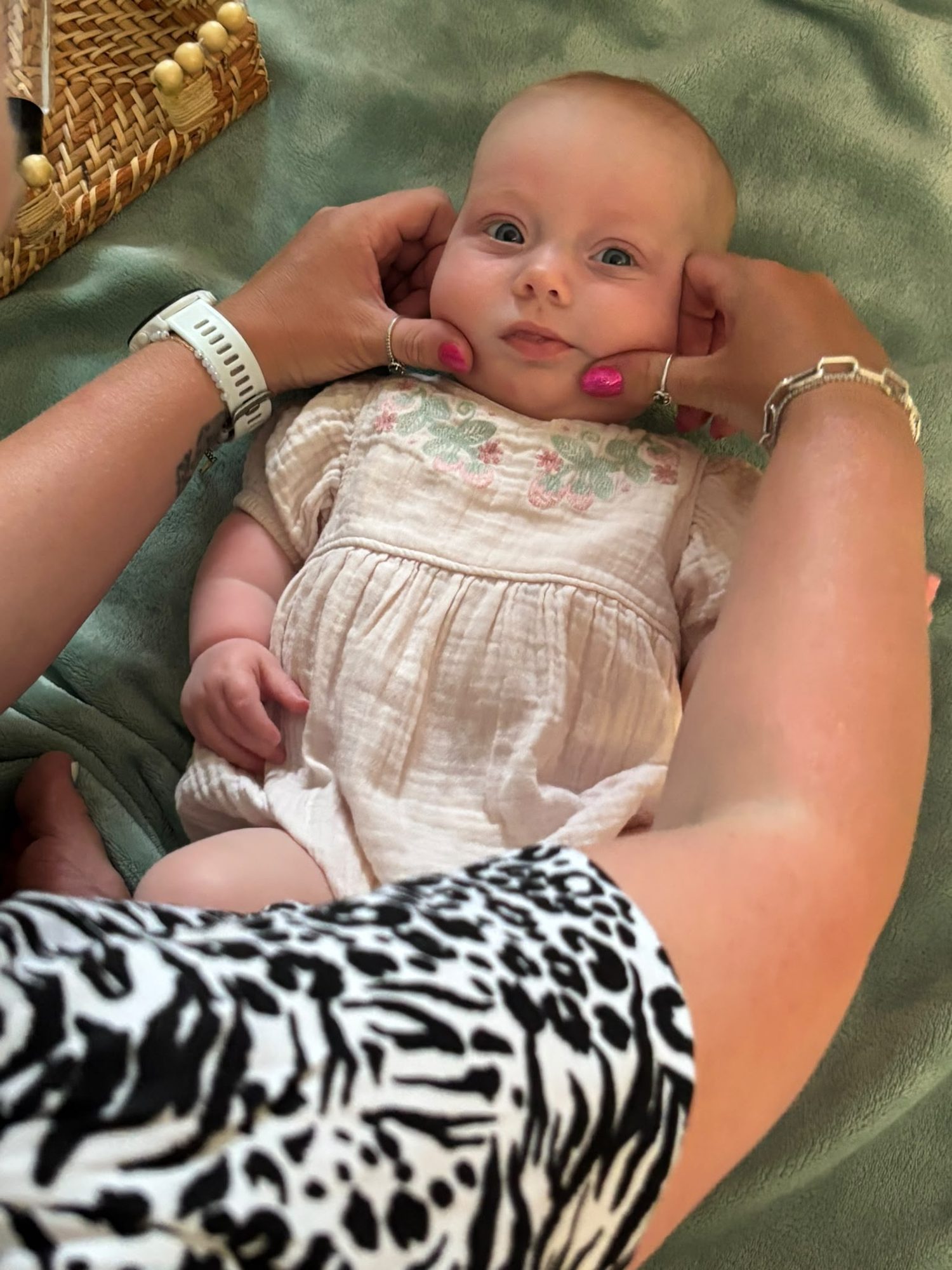
    A baby resting contentedly in Jess arms on a sage green blanket
    The bit that lasts long after the course finishes.

    The bit nobody tells you

    Here is the thing I have come to believe after sixteen years around new families and three babies of my own. The right time to start is usually the week you feel like you cannot face it.

    The weeks when getting dressed feels like a project are exactly the weeks when an hour in a warm room with other people in the same boat does the most good. Nobody in that room minds if you are late, if your baby screams, or if you spend the whole session feeding. Most weeks somebody does all three.

    If your baby is six weeks or older and you are somewhere in Medway, come along. If they are not quite there yet, message me anyway and I will let you know when the next block starts.